
AsAManThinketh.net Presents
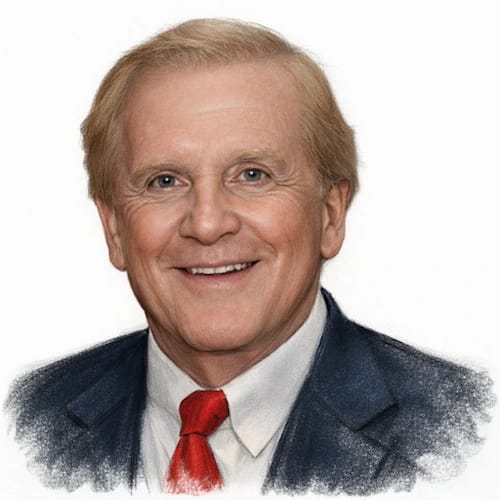
Denis Waitley:
The Psychology of Winning
& His Enduring Legacy
Author of Seeds of Greatness · Creator of The Psychology of Winning · One of the most-heard voices in personal development history
June 6, 1933 – June 7, 2025A Question That Launched a Lifetime of Teaching
Denis Waitley spent more than five decades answering one question — a question he first began wrestling with as a young man studying human behavior, determined to understand why some people thrive under pressure while others collapse, why some achieve lasting success while others remain stuck despite talent and effort.
His answer became The Psychology of Winning — one of the most widely distributed audio programs in the history of personal development, produced through Nightingale-Conant Corporation and heard by millions of people on every continent.
But the answer itself was simpler than most people expected:
“The winner’s edge is not in a gifted birth, a high IQ, or in talent. The winner’s edge is all in the attitude, not aptitude.”
— Denis WaitleyFor Waitley, winning was never about defeating others. It was about becoming the finest version of yourself — and the tools for doing that lived entirely in the mind.
From the Naval Academy to the World Stage
Denis Waitley was born on June 6, 1933, in San Diego, California. He earned a bachelor’s degree from the United States Naval Academy — an institution built on the idea that character, discipline, and mental fortitude matter as much as raw ability.
That conviction never left him. It shaped every program he created, every book he wrote, and every stage he walked onto. The Naval Academy had taught him that preparation, self-belief, and resilience were not born traits — they were trained ones. That insight would become the foundation of his life’s work.
After his military service, Waitley moved into the world of performance psychology, eventually becoming one of the most sought-after consultants in the field of human achievement. Publisher and course platform biographies describe him as a consultant in sports performance psychology contexts, with a career that brought him before Olympians, corporate leaders, astronauts, and sales professionals alike.
His materials were translated into 14 languages and distributed in scores of countries. His reach was genuinely global — not because he was a celebrity, but because his ideas worked.
The Psychology of Winning: What It Actually Teaches
When Nightingale-Conant launched The Psychology of Winning, it was positioned deliberately against the motivational-hype style of the era. The program’s own description called it a “tough, no-nonsense approach” grounded in documented research — not a collection of feel-good affirmations, but a systematic training curriculum for the inner game of achievement.
The program identified ten qualities that Waitley believed separated peak performers from everyone else. These weren’t personality types you were born with — they were habits of mind you could cultivate:
Optimism as a trained discipline
Driven by internal standards
How you see yourself sets the ceiling
Goals as a compass, not a cage
Owning your responses, always
Daily habits that compound over years
Intrinsic worth as the engine of action
Awareness of your capacity to grow
Knowing who you are and why you act
Visualizing the person you’re becoming
What made these qualities radical in their day — and still timely now — was Waitley’s insistence that they were not gifts given to some people at birth. They were skills. They could be practiced. They could be installed through repetition, visualization, and deliberate self-talk management. That message was hopeful in a way that demanded something of the listener: responsibility.
The Core Distinction That Defined His Work
Waitley consistently drew a line between winning as domination and winning as personal excellence. In long-form interviews and across his catalog, he defined true winners as people who pursue their own highest potential — not people who beat others.
This reframe made his work accessible to people who had no interest in competition but deep hunger for growth: parents, teachers, managers, salespeople, athletes, and anyone navigating the pressures of modern life.
“True winning is not beating others,” he said in one interview. “It’s the daily commitment to becoming the best version of who you are.”
Books, Audio Programs & the Complete Works Catalog
Denis Waitley’s publishing legacy spans more than four decades, two major distribution networks, and every format from vinyl records to streaming memberships. Here is an overview of his most significant works:
Major Books
| Title | Year | Central Theme |
|---|---|---|
| Seeds of Greatness | 1983 | Nurturing the potential within every person; inner growth over external measures |
| The Winner’s Edge | 1985 | The slight attitude advantage that separates peak performers from the rest |
| The Joy of Working | 1986 | A 30-day system for finding success and happiness in your professional life |
| Being the Best | 1987 | Personal excellence as a daily practice, not a destination |
| The New Dynamics of Winning | 1993 | Champion-level thinking for a world of increasing change and pressure |
| Empires of the Mind | 1995 | Leading and succeeding in a knowledge-based world through continuous learning |
Landmark Audio Programs (Nightingale-Conant)
Waitley’s audio programs — produced with Nightingale-Conant, the company co-founded by his colleague Earl Nightingale — were the primary vehicle through which millions of people encountered his work. These programs were designed for repeated listening: the cumulative effect of hearing the principles over and over was, Waitley believed, how the inner game actually changed.
| Program Title | Core Promise |
|---|---|
| The Psychology of Winning | Program your self-concept for high performance — the flagship course |
| The Inner Winner | Build confidence from the inside out; internal validation over external approval |
| Empires of the Mind (audio) | Navigate the knowledge economy with a leader’s mindset |
| The Power of Resilience | Turn adversity into fuel; come back stronger from setbacks |
| The Subliminal Winner | Rewire beliefs at the subconscious level through repetition and visualization |
| How to Handle Conflict and Manage Anger | Emotional regulation as a performance skill |
The Five Pillars of Waitley’s Philosophy
Across his books, programs, and decades of speaking, five ideas appeared so consistently that they became the structural signature of everything he taught:
1. Self-Esteem Is the Engine, Not the Reward
Most people think self-esteem is earned through accomplishment — you succeed, therefore you feel worthy. Waitley reversed this. He argued that self-esteem is the prerequisite for accomplishment. You act in ways consistent with how you see yourself. Raise the inner image first, and the outer results follow. This is why his programs began not with goal-setting techniques but with identity work: who do you believe yourself to be?
2. Visualization Is Mental Rehearsal, Not Magic
Waitley was careful to position visualization as a practical cognitive tool, not mysticism. Drawing on research in sports psychology and performance studies, he taught that the brain does not distinguish vividly imagined events from real ones at a neurological level. Athletes who mentally rehearse their performance improve it — not because they “attracted” success, but because repetitive mental simulation builds neural pathways that make physical execution smoother and more automatic.
3. Self-Talk Predicts Performance
The internal monologue running constantly in your mind is either working for you or against you. Waitley taught that most people’s self-talk is unconsciously negative — a running commentary of doubt, comparison, and self-criticism that quietly limits every action they take. Training self-talk — deliberately redirecting it, monitoring its tone, replacing destructive patterns with affirming ones — was central to his curriculum from the very beginning.
4. Resilience Is a Practice, Not a Personality Trait
Setbacks, failures, and disappointments are not obstacles on the path to achievement — they are the path. Waitley’s approach to resilience was grounded and unsentimental: adversity doesn’t build character automatically. How you interpret and respond to adversity does. His Power of Resilience program addressed this directly — giving listeners specific frameworks for processing failure as data, not verdict.
5. Personal Responsibility Is Non-Negotiable
Throughout his career, Waitley returned again and again to the idea of agency: the recognition that while you cannot control every circumstance, you always control your response to it. This was not naïve optimism. It was, he argued, the defining habit of every high performer he had ever observed — the unwillingness to cede authorship of their own life to external conditions.
A Life in Milestones
Denis Waitley’s Enduring Legacy
Denis Waitley died on June 7, 2025 — one day after his 92nd birthday — in San Diego, California. He had lived long enough to see the ideas he pioneered become mainstream: self-talk, visualization, growth mindset, emotional resilience, and the psychology of peak performance are now discussed in business schools, sports programs, and therapy offices around the world.
He did not receive the same level of cultural celebrity as some of his contemporaries. But in terms of documented distribution and documented listenership — measured in program units sold, Audible review counts, and the sheer number of decades his work has remained in print and in production — his reach is difficult to overstate.
The Nightingale-Conant catalog that bears his work represents one of the longest-running success stories in the history of audio publishing. The core program, The Psychology of Winning, has been in continuous distribution for more than four decades. That kind of longevity is not an accident. It reflects ideas that continue to prove themselves in the lives of people who apply them.
“The most important opinion you have is the one you hold of yourself. And the most significant things you say all day are the things you say to yourself.”
— Denis WaitleyHis peers in the personal development canon — Earl Nightingale, Jim Rohn, Bob Proctor, Zig Ziglar — shared a common belief that the invisible architecture of a person’s thinking determines the visible outcomes of their life. Waitley’s contribution to that tradition was specific and durable: he translated the principle into systematic, repeatable training that worked not just for exceptional talents but for ordinary people determined to become extraordinary.
Frequently Asked Questions About Denis Waitley
Explore Denis Waitley Audio at AsAManThinketh.net
Discover selected Denis Waitley recordings alongside the timeless works of Jim Rohn, Bob Proctor, and Earl Nightingale — the classic voices of personal development, all in one place.
Think Create ProsperRelated Voices in Personal Development
Denis Waitley spent decades in the company of the greatest personal development teachers of the twentieth century. If his work resonates with you, these related figures share the same tradition:
Earl Nightingale — Nightingale-Conant co-founder and creator of The Strangest Secret, the first spoken-word recording to earn a Gold Record. Nightingale’s central teaching — we become what we think about — is the direct philosophical ancestor of Waitley’s self-concept work.
Jim Rohn — America’s foremost business philosopher, and a figure Waitley respected deeply. Rohn’s discipline-and-philosophy approach to success complemented Waitley’s psychological focus.
Bob Proctor — A student of Earl Nightingale who carried the tradition forward into the modern era, with a particular emphasis on belief systems, paradigms, and the deep subconscious roots of performance. Proctor and Waitley shared the same conviction: change the inner image, change the results.
