
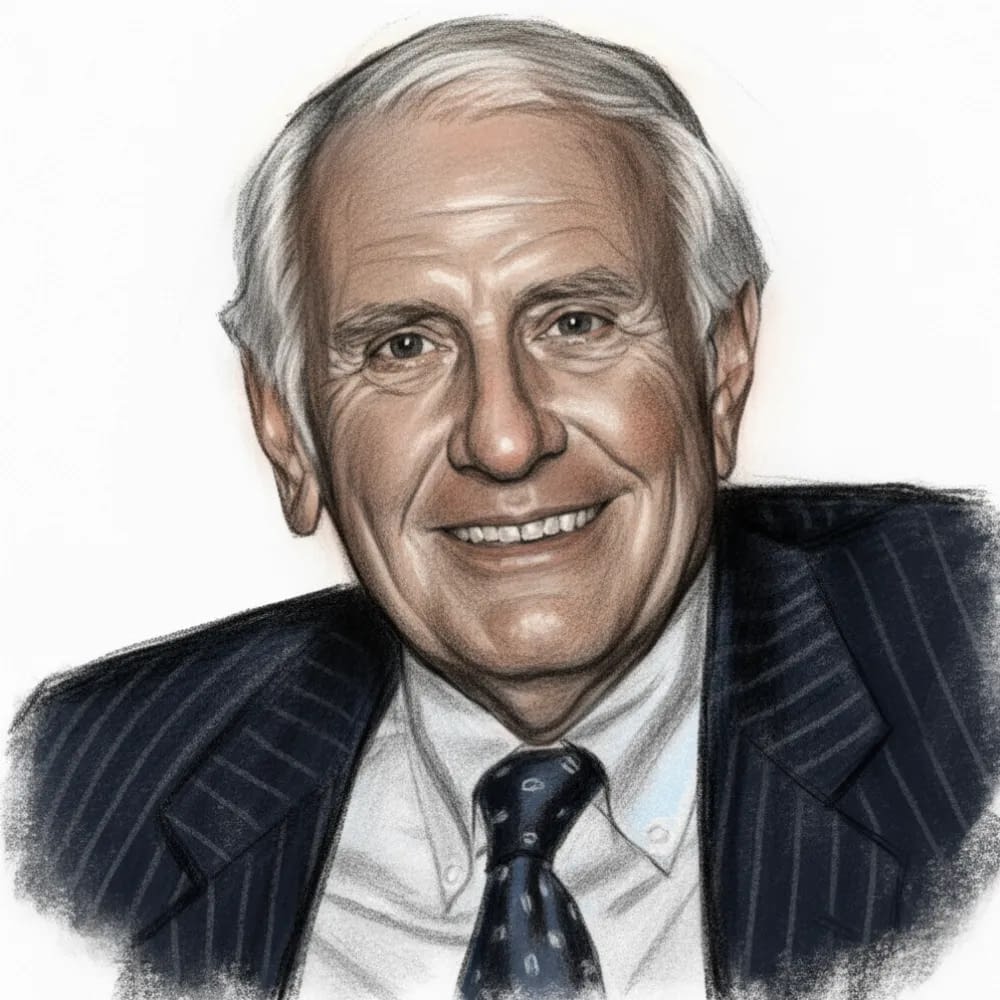
AsAManThinketh.net Presents
Jim Rohn: Biography, Philosophy, Teachings & Lasting Legacy
The life and ideas of the Idaho farm boy who became one of the most influential voices in personal development — including first-hand memories from publisher Vic Johnson.
September 17, 1930 – December 5, 2009Who Was Jim Rohn?
Jim Rohn (1930–2009), born Emanuel James Rohn, was an American entrepreneur, author, speaker and business philosopher whose practical teachings on personal philosophy, discipline, goals, self-education, wealth and personal development influenced millions of people. Over a speaking career that lasted more than four decades, Rohn became known for turning large ideas about success into simple principles people could remember and apply.
Jim Rohn never needed complicated language to make an important point. That was part of his gift. He could begin with a farm, a season, a paycheck, a promise or a box of Girl Scout cookies and, a few minutes later, leave an audience thinking differently about responsibility, money, relationships and the direction of their lives.
His official biography credits him with more than 6,000 speaking engagements, more than 5 million seminar attendees and more than 40 years of impact. His influence also traveled through the people he taught. Tony Robbins has repeatedly identified Rohn as one of his formative teachers and mentors, and generations of speakers, entrepreneurs and personal-development students continue to study Rohn’s recorded seminars today.
From an Idaho Farm to a Philosophy of Success
Emanuel James Rohn was born on September 17, 1930, in Yakima, Washington, and grew up on his family’s farm near Caldwell, Idaho. The rhythms of farm life would later become some of his most useful teaching metaphors: spring follows winter, harvest follows planting, and wishing cannot substitute for sowing the right seed.
Rohn attended college for one year before entering the workforce. By his mid-twenties, however, he was dissatisfied with where his life was going. He had responsibilities, ambitions and a growing awareness that working hard by itself was not solving the problem.
That frustration became especially vivid in a story Rohn told for years: a Girl Scout came to the door selling cookies, and he did not have the $2 he needed to buy a box. He turned her away with an excuse rather than admit he could not afford them.
The amount was tiny. The realization was not. Rohn later used that embarrassing moment as a symbol of the question that began changing his life: How had he become the kind of person who could not comfortably handle such a small expense — and what would he have to change in himself so his circumstances could change?
The Turning Point
Rohn’s story was never really about two dollars. It was about the moment an excuse stopped working. Instead of blaming the economy, his employer or his circumstances, he began looking at the one variable he could change directly: himself.
Earl Shoaff: The Mentor Who Changed Jim Rohn’s Direction
At about age 25, Rohn encountered entrepreneur Earl Shoaff. The relationship became one of the defining events of his life. Shoaff did not simply give Rohn business tactics; he introduced him to a different philosophy of personal responsibility, value, learning and wealth.
Rohn began to understand that income was not merely something an employer decided to give him. It reflected, in part, the value he had learned to bring to the marketplace. If he wanted a different life, he needed to become more knowledgeable, more disciplined, more skillful and more useful.
“Work harder on yourself than you do on your job.”
— Jim RohnThat principle became one of the clearest summaries of Rohn’s entire body of work. The primary project was not the goal, the promotion or even the money. The primary project was the person pursuing them.
Under Shoaff’s mentorship, Rohn’s fortunes changed dramatically. By age 31, he had become a millionaire through direct sales. More important to Rohn than the money was the person he had become in the process — and the philosophy he could now explain to other people.
Verified against Jim Rohn’s official biography.
How Jim Rohn Became the “Business Philosopher”
In 1963, Rohn was invited to tell his story at a Rotary Club meeting. One invitation led to another. What began as an account of his own transformation eventually became a speaking career that took him around the world.
Rohn was frequently described as a business philosopher, a label that suited him better than “motivational speaker.” Motivation might get someone excited for an afternoon. Rohn wanted people to examine the ideas beneath their choices: their beliefs about responsibility, value, time, money, discipline, association and the use of their own potential.
His stage style was distinctive. Rather than rely on spectacle, he taught through stories, questions, contrasts and phrases that were easy to carry home. He could be funny without becoming frivolous and demanding without becoming harsh. The audience was invited to laugh at human nature — and then recognize themselves in it.
In 1985, the National Speakers Association inducted Rohn into its CPAE Speaker Hall of Fame — the Council of Peers Award for Excellence, a lifetime honor for speaking excellence and professionalism.
Verified against the National Speakers Association’s CPAE records.
What Did Jim Rohn Teach?
Rohn’s recorded seminars cover a wide range of subjects, but several ideas appear again and again. Together they form the backbone of his philosophy.
1. Your Philosophy Comes First
Before results come attitudes, decisions and actions — and beneath those sits a personal philosophy. Rohn taught people to examine the ideas they had accepted about work, money, responsibility and possibility.
2. Become More Valuable
Rohn shifted the question from “How do I make more?” to “How do I become more valuable?” Skills, knowledge, character and usefulness increase what a person can contribute — and therefore what opportunities can follow.
3. Discipline Beats Intention
Goals matter, but daily disciplines carry them into reality. Rohn emphasized that small actions, repeated consistently, eventually create consequences far larger than the actions themselves.
4. Goals Change the Person Pursuing Them
A worthwhile goal does more than produce an achievement. It requires growth. In Rohn’s philosophy, one of the greatest rewards of pursuing a goal is the person you must become to reach it.
5. Guard Your Associations
Rohn taught that the people and ideas surrounding us influence our standards, expectations and habits. Choosing our environment carefully is therefore part of choosing our future.
6. Self-Education Never Ends
Formal education can open doors, but Rohn believed lifelong self-education expands what a person is capable of creating. Reading, listening, observing and learning from experience remain essential long after school ends.
7. Take Responsibility for Your Response
You cannot control every season, setback or economy. You can control what you learn, how you prepare and what you do next. That distinction runs through nearly every Rohn teaching.
8. Success Is More Than Money
Rohn spoke often about income and financial independence, but his larger definition of success included character, relationships, health, contribution, learning and the quality of one’s life.
Jim Rohn: A Brief Timeline
How Jim Rohn Influenced Tony Robbins
One of the clearest measures of Rohn’s influence is what happened through the people he taught. Tony Robbins has described Jim Rohn as an early teacher and mentor who introduced him, while he was still a teenager, to a new way of thinking about personal change.
Robbins later worked promoting Rohn’s seminars. The influence is easy to recognize: the insistence that change begins with the individual, the importance of continually feeding the mind, and the idea that a person must grow in order for life to improve.
Robbins eventually developed his own style, methods and global platform, but he has continued to acknowledge the role Rohn played at a formative time in his life. That mentor-to-student relationship helped carry Rohn’s ideas into an audience far larger than any one speaker could reach alone.
Tony Robbins has described Jim Rohn as his original teacher; the verification source appears at the bottom of this page.
Jim Rohn and As a Man Thinketh
Jim Rohn’s philosophy fits naturally within the tradition established by James Allen’s 1903 classic As a Man Thinketh. Allen’s central theme is that thought and character shape the direction of a person’s life. Rohn brought that same cause-and-effect idea into the language of modern work, goals, income, discipline and personal responsibility.
Rohn strongly endorsed the book, saying:
“This book will ground you in the belief that whatever you believe you become. It’s based on the idea that we are what we think.”
— Jim Rohn on As a Man ThinkethSource: Jim Rohn, “7 Books Everyone Should Read.” Verification link appears at the bottom of this page.
The connection is deeper than a shared quotation. Allen wrote about the inner causes that eventually appear as outer circumstances. Rohn repeatedly taught that results are downstream from philosophy, attitude and activity. Different language, different era — but a remarkably similar conviction: lasting change starts inside the person before it appears outside the person.
The Jim Rohn I Knew
My great friend Bill Rosselle introduced me to Jim Rohn in the 1990s through a tape set he loaned me. Needless to say, my life hasn’t been the same since.
Like so many others, I was drawn to Jim’s simple wisdom. He had an extraordinary ability to take something complicated about life, success or human nature and reduce it to a truth you could understand — and remember.
But having had the privilege of spending time with Jim personally, I discovered something even more important:
It was the kind of wisdom he lived.
Unlike so many of the so-called heroes of today, this hero — an icon of the grandest sort — walked his talk.
I once calculated the amount of time Jim would have had to spend traveling, preparing and speaking to more than 6,000 audiences around the world. I came to the conclusion that he literally gave his adult life to helping others find what he called that “day that turns your life around.”
I was almost 50 years old by the time I met Jim, but he was one of those people you felt as though you’d known your whole life.
There was nothing pretentious about him. He felt no need to impress you.
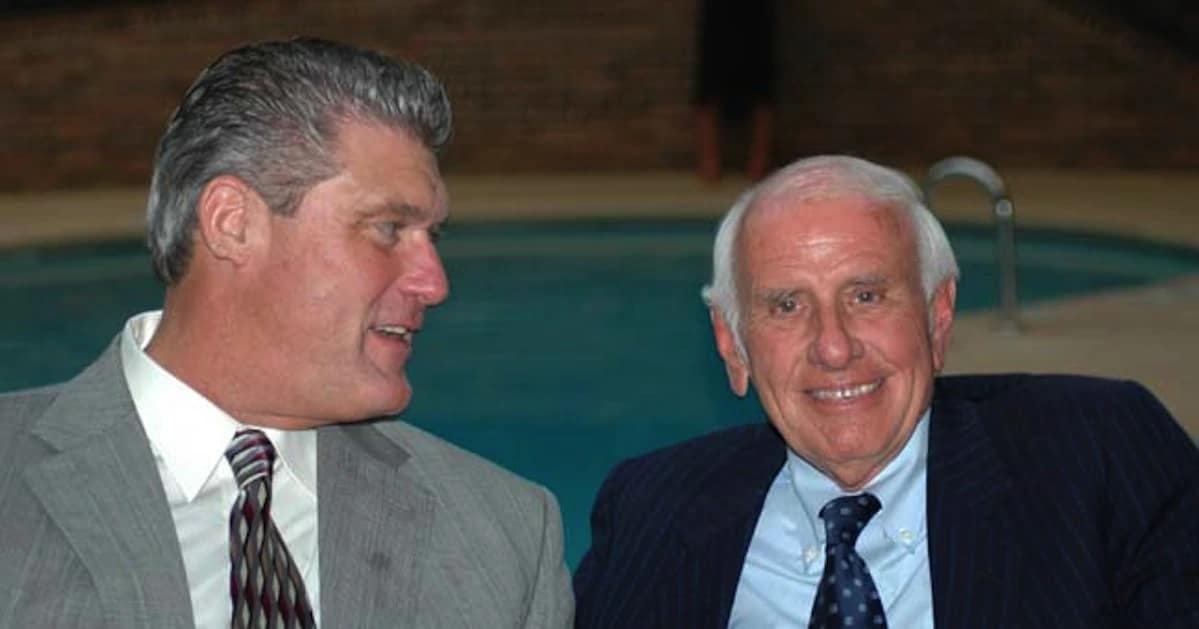
I have Kyle Wilson, founder and president of Jim Rohn International, to thank for our relationship. Kyle made it possible for me to speak at one of Jim’s events and for Jim to speak at several of ours.
Some of the highest points of my professional life were when Jim and I spoke together at our Claim Your Power Now event in Dallas and when he joined us again for Claim Your Power Now in Atlanta.
But above even those memories, I will always cherish the interview I had the opportunity to do with Jim for our Goals2Go TV show.
We recorded it on the first day of production — I think it was only the second show I had done that day — and I was fighting a major cold. I was nervous and excited at the same time.
But Jim was Jim.
Here was a man who had spoken to thousands of audiences around the world, and to him this was simply another day at the shop. His calm presence and quiet encouragement immediately put me at ease.
Even today, when I listen to Jim’s audios, it’s almost as though he’s standing there beside me, sharing that “Idaho farmboy wisdom.”
I’ve met very few people in my life who could put life into the simple perspectives Jim could.
They don’t make ’em like Jim anymore.
Why Jim Rohn’s Teaching Still Matters
Personal development has changed dramatically since Jim Rohn first stepped onto a stage. The delivery systems are different. Audiocassettes became downloads, seminars became streaming video, and social media reduced many ideas to a few seconds of attention.
Yet the questions Rohn asked have not changed much at all. What are you becoming? What are you reading? Who are you listening to? What disciplines are shaping your days? Are you blaming conditions you cannot control, or developing the skills and character you can control?
That is why his teaching continues to travel. It is not dependent on a particular technology, economy or generation. Rohn’s subject was human nature — especially the uncomfortable gap between what people say they want and what their daily choices are creating.
He also offered something increasingly rare: simplicity without shallowness. The lessons were easy to understand but difficult to exhaust. A person could hear the same seminar years later and discover that a sentence meant something different because the listener had changed.
Selected Works by Jim Rohn
Jim Rohn’s ideas reached audiences through seminars, recordings and books. For biographical context, these are among the works most closely associated with his teaching. The titles are intentionally not linked to outside retailers.
- My Philosophy for Successful Living — a concise presentation of Rohn’s philosophy of personal responsibility, discipline, value and purposeful living; this edition includes a foreword by Vic Johnson.
- The Five Major Pieces to the Life Puzzle — Rohn’s framework of philosophy, attitude, activity, results and lifestyle.
- Seven Strategies for Wealth & Happiness — practical principles for goals, learning, finances, relationships and personal growth.
- The Seasons of Life — Rohn’s enduring metaphor for preparing for and responding to life’s changing seasons.
- Leading an Inspired Life — teachings on character, discipline, leadership, purpose and personal development.
- The Treasury of Quotes — a collection of Rohn’s concise observations on success, enterprise, relationships and life.
Want to Go Deeper With Jim Rohn?
Reading Jim Rohn’s philosophy is one thing. Hearing him teach it is another. The Jim Rohn Publisher’s Legacy Collection brings together an ebook, audio teaching and an exclusive bonus video featuring Jim Rohn and Bob Proctor together on stage.
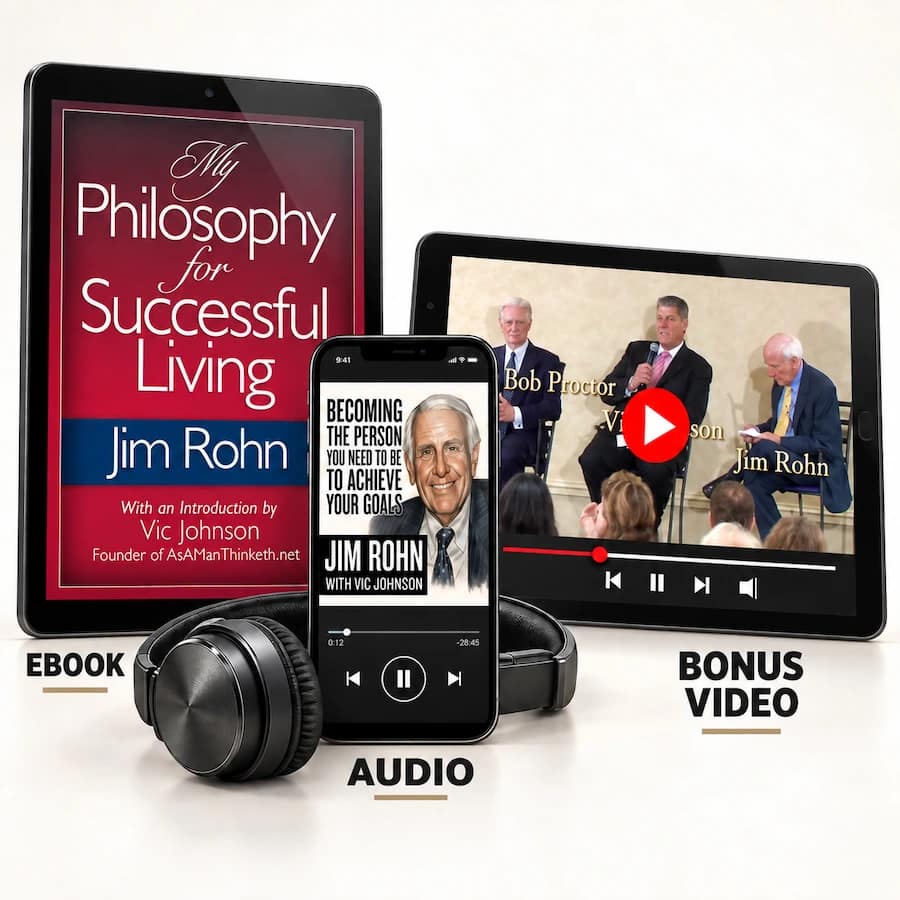 Explore the Publisher’s Legacy Collection
Frequently Asked Questions About Jim Rohn
Related Voices in Personal Development
Jim Rohn belongs to a remarkable tradition of teachers who believed lasting change begins within — with the way we think, the philosophy we adopt and the person we choose to become. If Rohn’s ideas resonate with you, these related thinkers explored many of the same principles from their own distinctive perspectives.